Introduction
I received an important question from an anonymous student asking me how they should study to improve their grades. I want to help as much as possible, but I know that telling someone to study does not work. If only it were possible to provide a few hints that might do the trick, that would have been wonderful. However, success in studying, as in any area of life, requires dedication and planning; and it requires personal effort, persistent work, and most importantly, a vision of a brighter future to be realized.
I will share the question below and answer it extensively after a pedagogical introduction, hoping it might benefit readers in all stages of their academic and professional lives. If you believe that this article will help you, remember that reading it is not enough. Success is not a spectator sport. Moreover, you have to be smart in adopting these lessons, since, unless you’re very young, you are the person who understands your situation the most. And even if you are not very smart or talented, you can always try as much as you can and you will see results. You don’t need tutoring for this, just a belief that you can get better by yourself, and a steady and continual effort. (As the saying goes, an idiot can wear his coat better than a wise man can put it on for him.)
And if you believe this message might help your sons and daughters, your siblings, your students, your friends, or whoever can be helped by you, you might want to read it first and consider how to present the ideas to the ones you’re interested in helping. Usually, the best way to present moral lessons to others is to exemplify them. Remember how you’re told on airplanes to put the oxygen mask on yourself first and then to help your neighbors? This works here as well. You have to know these lessons by heart by applying them, and only then can you teach them to others. (As Aristotle reminds us, the best teacher of principles is one who exhibits the very same principles and allows others to emulate him.) Human beings are the best imitators, and that’s how they learn the most. In more than one way, learning is changing one’s behavior through experience and imitation.
The student’s question
I started my studies at university with bad grades, and this is my second year. My grades rose to C and C+. I don’t know what the problem is or how to solve it. I don’t want to start the second semester yet. My GPA is 2.1/4.0. And I don’t know how to deal with this problem. By the way, I am studying microbiology.
Anonymous Student
Why do we Fail?
This is indeed a big problem: What to do when our grades go downhill? Many people suffer from this in silence. They are ashamed of their performance. Their grades start deteriorating, and they eventually drop out of university or graduate with an unsatisfactory GPA. This happens for a myriad of reasons, and we cannot simply call these students lazy or stupid, for many are smart. Sometimes they fail due to their habits and practices, and sometimes due to their environment. We should not commit the Fundamental Attribution Error by blaming them, and not their environment (or vice-versa). We need to understand their situation as much as possible. That is, you, the reader, should understand your situation, or your student’s, before taking any step further.
Many of the students who feel that they fell from grace might have chosen the wrong specialty in school (or in life) in which they are not naturally good and talented; or they have chosen majors that they do not enjoy studying; or in choosing their preferred majors, they did not focus on the topics which they are most passionate about. Maybe they have abusive parents or spouses. Maybe they’re too poor to be able to concentrate. If these were their problems, this article can only help them so much. They are advised to go study what they want to dedicate their lives to, instead of slogging their way through something they do not enjoy. Or to take care of their family situation. Or even consider getting a job that can sustain them until they are able to study. This article focuses on the habits that can help us succeed in studying.
With that said, let us consider the student who has studied something because he has no better options. Sometimes we find that we have no great choice but to study something we do not like much because it pays well, and we need the money to lift ourselves from poverty, or to secure a lucrative job. The reader may find a million reasons to choose a major that is not his favorite and enjoy his preferred field at home. I, for one, started with accounting at my university, then changed my major to physics after a year of accounting, because I wanted to be a scientist. Now, I write articles on economics more than I do for physics. That’s the nature of our modern lives, and there is nothing wrong with that. In all cases, it is best if you do good in school and get high marks in your exams, good grades in your courses, and a decent (specular) GPA.
Indeed, high marks, good grades, and a spectacular GPA both in high school and university can open up venues for our prospective lives that little else can. It’s the first (and in many ways, the most important) chance to prove ourselves to the world. However, getting good grades and a great GPA is easier said than done. And many problems can intervene with our endeavors. This makes wishing for better marks an infeasible solution if a great plan that is tailored to your personal life is not written and followed. But it may not be imputed that students with bad grades did not want the good marks. In most cases, they would love the success, praise, and joy that usually come along with being great students. The issue they face is that they are unable to deal with the many problems that prevent this favorable outcome.
Preliminary Discussion about Success.
To tackle these kinds of problems, let us first ask ourselves this simple question: What is success, and how can it be achieved? This immediately pulls us toward another important question: Is there a mold in which we may pour ourselves in, in order to be successful? And to answer that question, a third needs to be answered: Who determines which of us are successful, and which aren’t? Let us answer these questions in order.
As human beings, we understand that we have desires and wants in life. We also have needs that should be satisfied, as satisfying our most basic needs is the sine qua non (without which, not) of a good life. No life can be good with these most basic needs unmet.
Then, we have wants, which are higher-level desires: A shelter is a basic need, without it, we are subject to the elements and can die of consumption, whereas a well-furnished home is lucrative and appreciated and sought after, though not necessary for life. Success requires satisfying needs, and it is better facilitated by satisfying higher-level desires: wants. The latter can save us time and effort, and it can make it easier for us to focus on our tasks.
Success is usually one of the names we give to our image of a good life. Mind you, I said ‘a’ and not ‘the’ good life: Let us think of a specific good life and try to actualize it. A good life, as I just mentioned, requires shelter, but many shelters can fit the bill — should we live in a tent, an apartment, a villa, or a castle? One can be successful in any, but it is harder to be successful if one lives in a squalid tent than in a well-furnished apartment. And experience informs us that living in a cozy villa is in some ways better than living in a magnanimous castle, where we are spoiled, and luxuries abound.
My contention is that success as a name for a good life is inaccurate for one important reason: We wish for success not in the ends we aim to realize but in the means we adopt toward such ends. And so, success describes the efficiency of the means we take to achieve a good end — namely, a good life. And the good life, in our day and age, almost always requires a robust education which in turn is widely measured in our ability to gain good grades. The grades do not necessarily indicate that our education was great, but they are good signs, in any case.
Given our affluence, our ends and goals in life — be they establishing a healthy family; becoming great scientists, intellectuals, entrepreneurs, and professionals; or starting a business that enriches society — have many means that can successfully and efficiently reach their results. A society’s welfare is often judged by the amount of available means to the average individual to actualize many of his goals in life. (Yes, it’s not about money per se, but the goods and services money provides, which allow us to actualize our goals.) Generally, the best means (i.e., the best methods) to our ends are ones with certain characteristics: They have worked before in similar situations; they use fewer resources than other means; they do not result in severe problems that we are not willing to deal with; they improve people’s lot but abridge no one’s rights (directly or indirectly); and they can be imitated by other people as they emulate us to achieve more goals.
Second, who should we call more successful in life, the physician, the physicist, or the poet? Or does success depend on material well-being, making the inherited billionaires, market-breaking entrepreneurs, and famous actors the more successful people and their enterprises the best? A wise man should think well before answering such questions since he understands that (our) success depends not on the perception of others, but on the satisfaction of our (own) goals.
Therefore, the wise man should construct an image of success in his thoughts that is well-scrutinized and thought about before pursuing it. No doubt, it will be influenced by the circulating social thoughts and the cultural morés of one’s culture and environment, but he still should to the best of his abilities isolate himself before considering what his goals in life should be. To quote the American philosopher and poet, Ralph Waldo Emerson: “It is easy in the world to live after the world’s opinion; it is easy in solitude to live after our own; but the great man is he who in the midst of the crowd keeps with perfect sweetness the independence of solitude.”
Society (i.e., other people) may have a say in who is successful. It is imperative that we listen to what other people have to say. But after hearing their opinions, we should judge for ourselves, and with cold and calm aloofness, whether they are right or wrong. Remember: No one can know what’s best for you other than yourself. You may be young and affected by impulses not well known to you. You may make grave mistakes. So, you have to make small (and big) mistakes to learn. But to be wise, you need to learn from your and other people’s mistakes.
Finally, the loss of individualism and individualistic thought, which are less pervasive today than in Western societies two centuries ago, has been to our detriment: Individualism is all about allowing each individual to adopt his image of success and to pursue it, even to the degree of single-minded zeal (think Melville’s Moby Dick). What should this tell us? We have to be convinced that our image of a good life is indeed worth living, worth realizing, and worth fighting for, to strive for it. If it was not you who chose these goals in life, how can you imagine yourself satisfied and content? Since when does seeking the approval of others make us happy? You are the ultimate determinant of your own success, and you should think for yourself what kind of life you are willing to live.
Problems and ‘Solutions.’
We all have our problems, big and small, but many of these big ones consume our energies and leave us incapacitated and incapable of working and studying well. One has to ask oneself as if one is addressing the question to a third party: Are you sure you resolved all your major problems?
You can’t know what the cause is (or causes are) of anything until you eliminate all the possible factors. To say that A caused B is to say that in this situation, nothing else caused B but A. Many issues will not allow you to study well. They need to be addressed one by one, in seriatim: Meaning, we have to consider problem A1, then problem A2, etc., and not problems A1 and A2 together. With the passage of time, more problems will occur, and some problems might automatically be resolved. Still, this is a tried-and-true method to help us rule out, to satisfaction, the causes of the problems currently ailing us.
And though we understand that problems can never be satisfactorily solved in closed form, forever, without creating different sets of problems with their own headaches, we can choose to substitute newer problems which we are willing to be responsible for with the old ones that are getting way out of hand.
The List of Questions.
I will list, from my experience and from the errors I noticed others around me committing, the major causes of bad studying habits and low grades here for reference. Please refer to this list whenever you don’t know what precisely is wrong and write these points down on a piece of paper and have it pinned to your door until you resolve each (i.e., substitute them with better trade-offs for your particular situation).
The questions are divided into five parts: Motivational, corporeal, technical, specific, and personal. The first set of questions discusses issues related to your motivation toward what you wish to succeed at. The three questions ask you (Q1) if you have faith in your ability to succeed, (Q2) if you look back at your progress and take notes, and (Q3) if you have supporters and competitors around you. These three questions keep you motivated, and pull you back up whenever you feel down and want to give up. The second set contains questions regarding your corporeal state, i.e., regarding your body as opposed to your mind. There, you will be asked questions that concern your physical health, from (Q4) the quality of your sleep, to (Q5) your diet, exercise, and participation in unhealthy habits. The set of technical questions concerns intellectual matters, from (Q6) your command of English, to (Q7) your ability to think critically. The set of specific questions asks you if (Q8) you study regularly, (Q9) solve your homework early, (Q10) make a study plan each week. The final set is personal, and it asks questions related to your own life, like (Q11) if you had unsolved problems at home, or (Q12) if you have the habit of wasting your time.
Motivational Questions:
- 1) Do you believe in yourself?
We can divide human behavior into reflexes and actions. When your physician strikes your knee with a mallet, you may move your leg reflexively. When you sleep, you make many movements you are unaware of. You can’t completely control when to yawn. You don’t choose when to be drowsy, even though you can choose when to go to bed. You become sick when you view disturbing images, and angry when someone intentionally harms you. These are involuntary motions and emotions, and we can only control them so much – ultimately, they are beyond us. And they will not be important here.
What is important is our actions: Our conscious behaviors. All our actions follow this specific pattern: (i) We notice an opportunity to make our current states better, or at least less bad; (ii) we think of a plan and consider how to implement it using our available resources; and (iii) we follow that plan through. We may not achieve our goal, which makes us revise (i), (ii), or (iii). And when we achieve our goal, we notice other opportunities, and repeat the process, and so on. Economists call this pattern of thinking praxeology and this process the action axiom.
Now, suppose you notice an opportunity to improve your grades or to become a better student. We can always infer from your actions that you had some belief in your capability. That is, you believed in yourself. It is necessary to believe in yourself, if at least by a little, to want to improve yourself. No one seriously tries to teach his cat quantum mechanics because no one believes that is possible. But we try to learn things because we think we can learn.
From this insight, we understand how important it is to believe in oneself. Without such belief, you will not even consider doing your best, because you will not believe that you will be capable of being successful. The only way is to believe that you have it in you to succeed. You have it in you to become a great student. That it is at least possible for you to plan for success. And that it is possible for you to become whatever you want to be, within reason, if you just try hard enough and smart enough. The importance of believing in oneself cannot be overstated.
And why stop there? Why not believe as well that you can achieve excellence? (The ancient Greeks called excellence arete, and developed moral philosophy to study excellence in human beings.) You may not be the greatest scientist who ever lived, but you can be a well-renowned scientist. You don’t need to be the best physician in your country, but you can be a competent physician. The best is the enemy of the good. And the good is sought for its own sake. Seek the good, and to do that, believe in your capabilities. This belief is different from our usual notion of knowledge. To believe in yourself by no means translates to your success: It is a necessary condition, not a sufficient one. And such a belief does not translate to knowledge as well: In believing, you are not saying that you can. You simply say that you want to do whatever is possible to reach your ends. To quote John Steinbeck’s famous phrase from East of Eden: “And now that you don’t have to be perfect, you can be good.”
As my friend, Aziz Al-Senafi, reminds me, you should not believe that you are a genius, but that you have the capacity to become a hard worker who will relentlessly work for his goals. It is better to work hard than to have the intelligence you desire innately because hard work is the ultimate trait of success. And knowing that you are a hard worker allows you to push yourself to the limit, whereas being told you’re a genius will cripple you into lethargy, because you will be afraid of not doing well and ‘proving’ to everyone that you are a fraud. (Of course, this pattern of thinking is wrong on so many levels, but it is how we tend to think, and it should be corrected; Einstein failed in many endeavors, can anyone deny that he’s a genius, or a hard worker for that matter?)
With that said, we are now able to talk about more technical matters: Sleep, exercise, and diet.
- 2) Do you look back at your achievements?
How can you know how far you’ve progressed if you don’t keep track of your achievements? The short answer is: You can’t. Look at each successive step you have taken along the way. Notice your successes. Study your failures. Learn. Without such calculation, you’re not really groping in the dark, but you’re the closest to such a scenario. And why is that? It’s because we can only be cognizant of so much: When you see yourself in the mirror, especially on a dark day, you may see your failures. But with a record of your successes, you will know that this image is fallacious. Such practices may help you eliminate such black-and-white thought patterns. You’re not successful or even a failure upon a simplistic short-sighted estimation based on the whims of the moment.
Keep a diary with weekly successes. (Writing entries daily is too occupying, and many have tried and failed. If it helps, go for it. But there’s often little in a day to keep track of, as opposed to a full week of activities.) Such a diary can help you understand what you’re capable of accomplishing on a daily or weekly basis. Did you achieve nothing today? Tomorrow is a new day. Sufficient tasks done in a week will make irrelevant a day that passes with nothing done. You, then, and only then, can relax, knowing you are industrious and productive. Moreover, writing your accomplishments helps you know what’s your limit. No one can study for eight hours straight. This intensive study session may not even be very fruitful because you will not be able to remember all that you studied, nor be able to follow your schedule efficiently.
You can also keep track of your progress with a list of achievements each year that shows you how much you’ve changed, what things you ought to be proud of, and what intellectual tools and human capital you have gained that can aid in future investments. You may not notice small progressive changes unless they are well documented and put down to paper. This can be through a CV, a reading list with many books checked off, or anything that suits you.
Another good way is to start writing articles or stories or to write lectures employing such ideas you have learned. This is the best way I know of. Do not move forward for the sake of moving forward: Let the purpose of progress be your own happiness. Focus on that task single-mindedly and imagine an image of yourself that you wish to actualize. And plan accordingly.
And yet another method is to read biographies for inspiration. Read the biographies of philosophers, scientists, authors, and great men and women of the past: Their notes were necessary for future biographers to document their lives: They serve the double function of committing memory to paper and helping one gauge his progress. Maybe it is time you did this as well. Two biographies that continually inspire me are Thomas Sowell’s (provided below), Richard Feynman’s, and Ludwig von Mises’. They were successful people, even though their lives were very difficult. Reading about them fills me with inspiration.

- 3) Do you have supporters and competitors around you?
This point really cannot be stressed enough. Do you have supporters around you who cheer for your successes and push you to ever new heights? Do you have real competitors who can set the limit of human achievements, given the shared circumstances? By all means, surround yourself with such people. And if you cannot find any, be that kind of person, and allow like-minded people to be attracted to you.
Aristotle, in his Eudemian Ethics, wasn’t far off the mark when he said that the best society is one of friends. Have a wife or a husband who will stick with you through thick and thin. Find friends who arm you with brotherhood and camaraderie, and who can support you and relish your victories. Have competitors around you who do not play dirty and envy them. These are essential, and not peripheral, requirements for success.

Do not be foul and attempt to destroy your competitors but be honorable and compete with them. Covet and envy have negative connotations, but as long as they drive you to action, they can be positive qualities. Collaborate with your friends and produce something meaningful to both your lives. Friends do not only give us company. They critique our ideas and reinforce our strengths. And finally, love someone platonically. That is not to say that your love should be chaste: To love platonically is to love someone in a way that helps you improve them and allow them to improve you.
And this is easier said than done, I know: But I know of one method that can help you most in that regard. Have high moral standards, lofty ethical principles, and high goals for your life, and abide by them, and you will soon attract all kinds of people. Then, and only then, can you retain those who are worthy. This is something you will discover once you exemplify the lofty traits. This is one of the central ideas of Emerson’s philosophy, especially exemplified in his essay, Self-Reliance.
Corporeal Questions.
- 4) Do you sleep enough?
No doubt, sleep is one of the most important facets of our lives. After all, we spend the biggest chunk of our day doing it. (Or at least, we’re supposed to.) You need 8 hours of continuous sleep, from 9 – 11 PM to 5 – 7 AM every day, depending on your location, lifestyle, work, school, family situations, etc… Sleep at the same hour every day and make it a habit to lie on your bed for an hour before sleeping, practicing simple tasks that calm you. I for one like to read before sleeping. And it helps me read as much as I read per year since I am consistent with it.
We realize, however, that it’s not always easy to sleep once we are in bed. Some do’s and don’ts. Avoid drinking water before bed for at least an hour. Avoid heavy meals before bed, too. Eat simple, bland, veggies for (or after) dinner. Don’t smoke or drink coffee or tea after 4 PM. Keep your phone away. Avoid bright white or blue (or LED) lights. Try not to engage in heavier physical activities at night. Your room has to be slightly colder than your body’s temperature, and showering an hour or two before sleeping often helps. Keep good air circulation in your room, and don’t let the air be too cold or dry as that may ruin your sleep and make it harder for you to breathe while sleeping.
If for any reason you wake up at night, do not open the lights, not even the bathroom’s lights if you’re going to the bathroom. And if you find it hard to sleep, go to another room and read for an hour or meditate. Staying in bed for too long when you’re not able to sleep will not magically put you to sleep. It might cause insomnia. It helps if you’re not too dormant all day long, and it also helps if you do not sit or lie down in bed when you’re not sleepy. Make it a habit to be in bed only when you wish to sleep.
And finally, don’t ruin your sleep schedule too often. Even on weekends and holidays, sleeping at 10 PM and waking up at 6 AM will make your life so much better.
There are many changes you can make to have a great quality sleep. If you want help in that department, I strongly encourage you to read Matthew Walker’s Why We Sleep. That book might help you with many things, however, if it misses any important point, write it down and make sure to do (avoid) it. Again, you know yourself best.
We do not sleep only because it helps us rest. We also sleep to retain memory better, to be more focused when we study, to elevate our moods, and to be able to focus. Without good sleep, we compromise on all of these. Nothing is worth ruining a good night’s sleep, especially since its effects are devastating.
- 5) Do you exercise, eat well, and take care of your health?
Our modern world implicitly encourages the dormant lifestyle. As I write this article, I am sitting down for hours, standing up, and walking for a couple of minutes at half-hour intervals. This is not enough. Our bodies need to be exercised. Think like a caveman: Would a caveman sitting on his butt all day survive? Probably not. Not only will he not be able to secure his next meal, but his peers will not respect him nor cooperate with him. Conspecific females will favor the active hunter, and thus his genes are not passed on, and he will be deprived of his progeny. This is hyperbolic, but it is not entirely irrelevant. Exercise gives us drive, makes us look better, organizes our day, and keeps us in better health and shape. These are to be desired. A healthy mind needs a healthy body. Try sitting down or lying in bed all day long, and tell me you don’t feel constantly fatigued!
Exercise does not have to be in the gym. Be active at home, at school, and work. Walk long distances. Have your headphones with you and listen to your favorite audiobook or jazz album. Or lose the headphones, and appreciate the scenery, the sights and sounds, the hustle-and-bustle of the outside world. Make friends in your city’s outdoor walks. Go to nearby parks on the weekends and walk it out. Or go to the gym. Don’t stay dormant, that’s the thing you have to avoid.
It shouldn’t take all your day. Don’t go to the gym when you need the time to study for your exam. Be smart about it. Half an hour a day walking is enough. I usually listen to my audiobooks while walking, or keep them at home and think about my current projects and plan everything while walking. That’s a part of your health you should not ignore. Another part is your diet.
Eating is not simply a matter of nourishment. The quality, quantity, and timing of our meals are very important for concentration and mood, as well. Have a good, hearty, breakfast every morning. An ideal breakfast might look like this: Two eggs; a source of fiber and carbs, such as fruits or vegetables; maybe some dairy products like yogurt, labna, or some slices of cheese. Don’t bulk up on breakfast — eat enough to sustain you. Don’t eat snacks that are carb/sugar heavy after breakfast or lunch, and certainly not after dinner. It is much better to sleep on a relatively empty stomach than to be bloated all night long. Let your meals be well-balanced, covering your essential micro- and macro-nutrients. Small, varied meals are the way to go; big ones full of empty calories leave you drowsy and tired throughout the day. I, personally, have read a nutrition textbook one Summer, and it helped me a lot. I will share another text that my friend recommended. I hope it can help you, too.
A good diet allows you to live a good life, away from many illnesses. And it helps you feel better about yourself. In many cases, if you feel bad, you might be deficient in some vitamins, minerals, or nutrients, and that will affect the quality of your life and education. Your health is a technical issue, but it is not a mere technicality. To echo Arthur Schopenhauer: “Health outweighs all other blessings so much that one may really say that a healthy beggar is happier than an ailing king. A quiet and cheerful temperament, happy in the enjoyment of a perfectly sound physique, an intellect clear, lively, penetrating and seeing things as they are, a moderate and gentle will, and therefore a good conscience – these are privileges which no rank or wealth can make up for or replace.”
Technical Questions.
- 6) Do you have a command of the English language?
English is the language of the sciences and the arts, and you need to master it for success. It doesn’t matter what you do, a command of English is indispensable in our modern world. You can do away with speaking and listening for the time being, even though they are essential tasks that you need to be able to use in your future career. For the time being, focus on reading and writing in English. Speaking and listening can help you a lot in reading and writing, and in essence, languages are meant to be spoken and heard instead of read and written. As John McWhorter says: If language in the human species started at 12:00 AM, then reading and writing arose at 11:07 PM. Then why stress reading and writing? Because they are the best methods by which you can excel in your education. Although all four skills need to be improved, you will be judged mostly on your ability to read and write. The spoken word is effervescent; the written word, eternal.
There is no royal road to English: The only way to succeed is to practice, practice, practice. You don’t need expensive texts or courses these days. You can simply download the Duolingo app on your phone and practice every day. I learned German this way, and you can, hopefully, be (almost) fluent in English if you practice a whole set of lessons each day. The application is very rewarding, and you will need to practice in some way. This, in my opinion, is the easiest and most accessible.
Why did I say ‘almost fluent,’ you might ask? Because great as it is, Duolingo is not enough. What you also need is to read and write in your leisure time. Try to read simpler things. One can start with children’s novels and then with classical fiction of the 20th century. You can read nonfiction to get a better grasp of reading. For the writing, write reviews of the books you read. Don’t stop with reviews, why not write articles? Heck, you can even write poems and short stories, and for the love of God, share them with your friends and family, and especially with those who are good at English. Let them correct your errors, document them, and make adjustments. This is a great method for two reasons: First, not only are you practicing reading and writing, but you are also receiving the feedback that will give you the drive. My dear friend, Mubarak Kamal once told me the same thing about sports, and I will share the video with you to be inspired. Instead of practicing sports for climbing mountains, you will be practicing reading and writing, to paraphrase Kurt Vonnegut, “to make your soul grow, for heaven’s sake; And do it as well as you possibly can: You will get an enormous reward — you will have created something.”
A nice book to improve your English once you can read English books is Strunk and White’s The Elements of Style. (This historically important book started as a pamphlet by Professor Strunk Jr. from Columbia University, which his student, the famous novelist E. B. White, fleshed out into a whole manual.) This manual helps you improve your writing, and writing beautifully at that, though again I remind you: There is no royal road to English. Practice makes perfect.
- 7) Do you have critical thinking skills?
How good are your critical thinking skills? Can you construct an argument? Evaluate it? Do you notice a fallacy when you see one? These are as important for your studies as they are for your life. The question requires intensive practice. First, you ought to know the principles of logic to know what is true and what isn’t, based on just the propositions being proposed. Second, you ought to know the common pitfalls people fall into. And third, you ought to know how to prove that your statement is correct. All of this lies within the domain of formal logic. And this set of skills is necessary for your academic, intellectual, and practical life, and you’re all the better for knowing them.

But formal logic is not enough. It’s not always easy to be able to think critically about matters and to formalize the ideas into an argument. For that, informal logic is needed. Informal logic studies the thought patterns of human beings in normal life situations, and how to improve them. Moreover, it helps us think about our thoughts themselves and be able to critique everyday speech and common ideas that occur every day in our minds. Informal logic is no less important in that regard, and this skill needs to be trained as well.
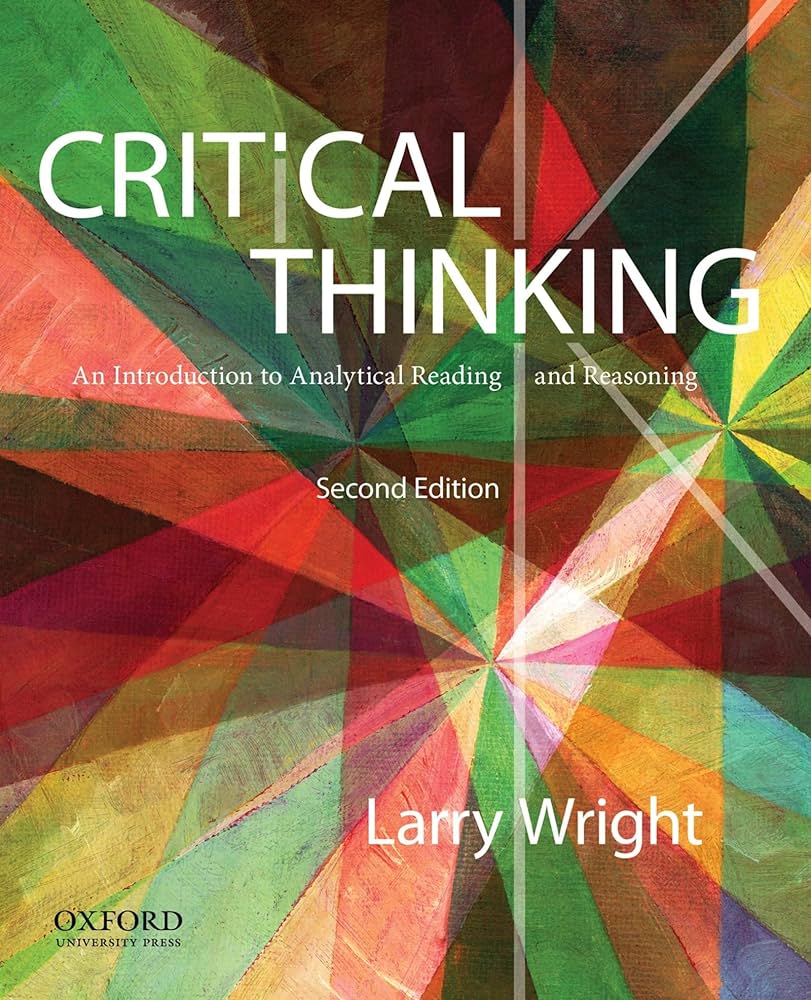
Finally, rhetorical skills are the ones we will often employ, especially on the fly, in our practical lives. And they consist of habits of logical thinking that are more social than purely intellectual. How to convince someone. How to listen to learn. How to question, and so on. This lies within the area of informal logic, and it intersects with what philosophers call rhetoric, which is one of the most important sciences learned by the Athenians for politics, philosophy, and law. To learn them, and to employ them well, helps you both improve your image as a critical thinker, and your ability to convince others of the arguments you have formulated and thought well of. Human beings respond to emotions, and NOT to reason. To be able to communicate emotionally is key.
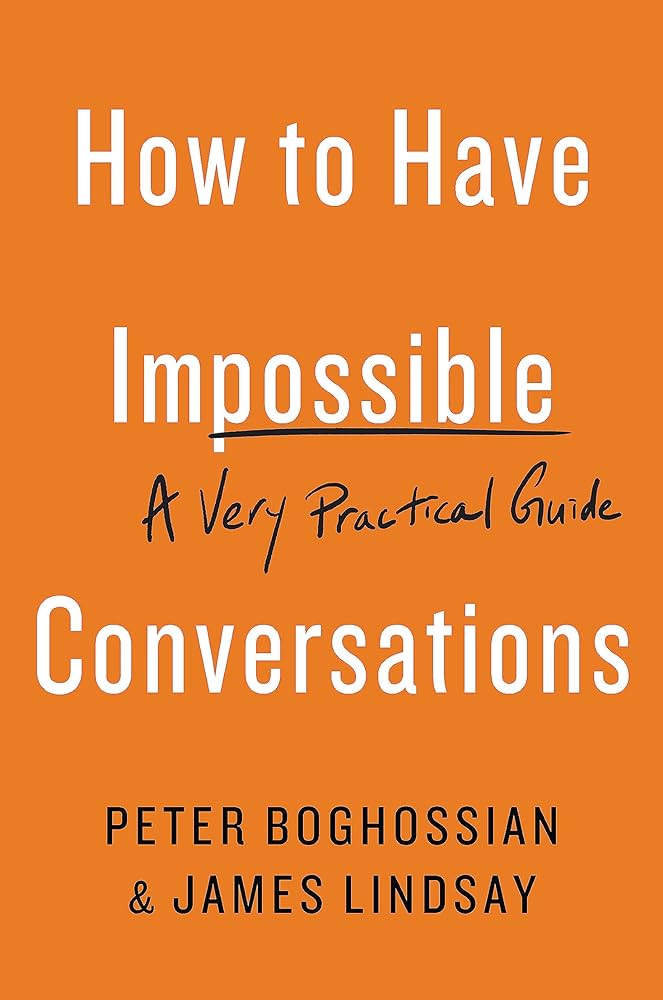
Let us now look at you, dear reader.
Specific Questions.
- 8) Do you study regularly?
For each course you registered for this semester, you need to put in at least 5 – 7 hours of studying each week. This goes for all actions you want to perfect in life. Invest time in the activities you want to be good at. The more time, the better. If you want to be a great pianist, you need to sit on the piano and practice for hours upon hours. The same can be said about studying.
Make sure to read from the textbook itself, even if you only need the slides for this course. You don’t even need to finish the book from cover to cover. Just read what is required for the course. Usually, these textbooks are written by researchers and scholars established in their fields. You would be wise to learn from the masters. Passive reading will help you, but only so much. Take notes. Summarize. Discuss. Compare.
And think about the applications of what you learned. Great thinkers apply their knowledge in one field elsewhere in the same field; this is how they usually make great discoveries. This is what you should do, albeit to a lesser degree now. I might advise you to open a psychology textbook and read the chapter on memory. It will help you quite a bit, and it’s a great investment of your time. I have personally studied psychology from this book, which is almost as old as I am. You can easily find a modern book on Amazon.

The suggested textbooks for your course can usually be found in the course description and syllabus, which the Professor distributes at the beginning of the semester. This works on all fields of study, from physics to medicine to finance to history to microbiology to electrical engineering. Make sure to get the best books (after consulting your instructor) and read the assigned chapters and handouts. Summarize them in a different notebook for each class. Add materials from additional readings in your notes. And revise your notes. The psychology text you will consult can help you with the best practices for studying. Know how you come to know things, and you will know more and better.
Do not delay studying even if the week did not include a lot of materials. Do not delay reading the texts and slides. And most importantly, try as much as you can to revise your notes and make sure you understand what you studied well. The mark of a good study session is the ability to memorize formulas or ideas and apply them in solving problems. To cement the ideas, I usually talk about what I studied with my friends and colleagues all week long to keep it circulating in my memory. And if you have read the first suggested reading, you’d understand that a night of good sleep can help you with memory retention as well.
Studying is not just reading the assigned material. It is summarizing that material in your own words (without looking at the text), and solving problems and exercises related to your course. If you can’t focus or concentrate on these, read questions #2 and #3. Many students face the problems of not finding the time to study, or not being able to read the material even though the page is open right in front of them. Sleep well, learn English, eat well, go take a walk then return. If a particular problem is too tough to solve, read it again, and sleep on it. John Steinbeck spoke true when he said: “It is a common experience that a problem difficult at night is resolved in the morning after the committee of sleep has worked on it.”
Which brings us to our next question.
- 9) Do you attempt to solve your homework as soon as you receive it?
As soon as you receive homework, read the problems and exercises, find out what is required, and attempt a solution no matter how bad or wrong you get it. If you’re stuck, write down on a piece of paper what, in your opinion, is missing from your memory and understanding that may help you solve the problem. Write these down, don’t keep them in your head. It helps you offload your tasks and organize them.
After you do all these, then (and only then) go ahead and ask your professors and TAs what is needed from the homework set. Then try to solve the homework again, based on what they told you, even if your solutions are, again, very wrong. Then after reading the texts and referring to your notes, go back to your solutions and try to address the errors in them. If you cannot do that, show your attempts to your professors and TAs. Instructors love and respect students who at least try to solve the problems by themselves. After solving the problem correctly, write down the problem and solution in your notebook, with the thought process that allowed you to solve it, detailing what you did in each step. This is what the best students do. And this is what I did, and I excelled in the toughest courses I took. (Many professors keep these notes and incorporate them in their textbooks. That’s what Young and Freedman did in their University Physics textbook, which they detail in a preface entitled “How to Succeed in Physics by Really Trying.”)
What I want you to get from this is this simple instruction: Do not postpone, do not delay, do not procrastinate, and do not give up. Depend on yourself. Attempt to solve problems by yourself. Then consult your instructors and peers. The best book I have read that addresses the age-old issues of procrastination, working on time, and pushing yourself to the limits, is the eminent social psychologist, Roy Baumeister’s great work, Willpower.
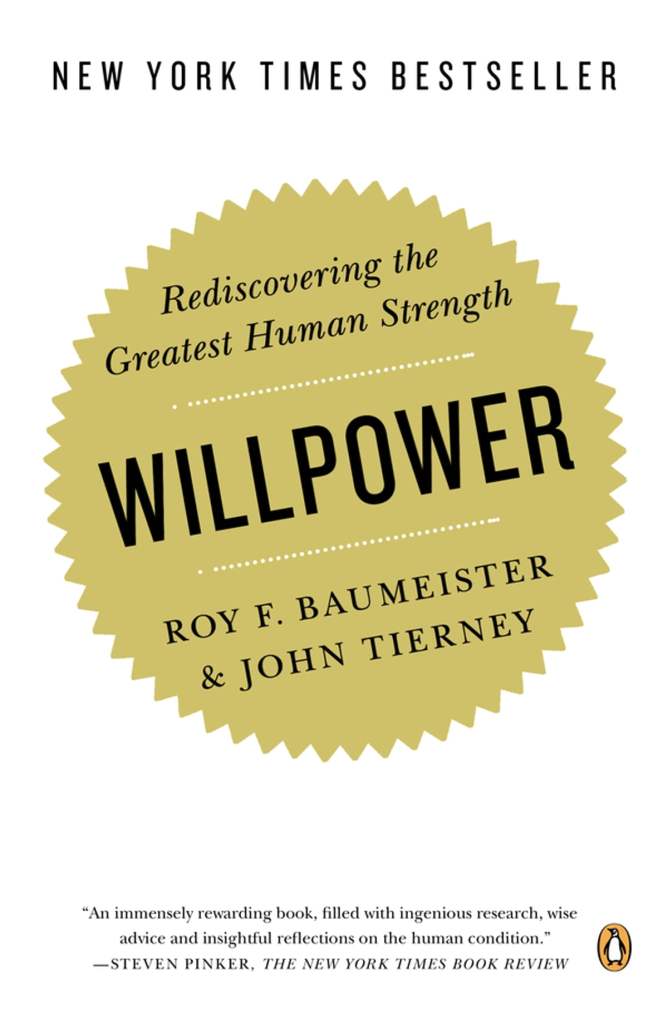
Delaying studying for an exam has never been a successful strategy for any student. Work on your tasks as soon as you can, not a second later.
- 10) Do you have a weekly plan?
Human beings act ordinally, not cardinally. What does that mean? It means that given an end (a goal), and several means to that end (plans to reach that goal), they choose the means that sacrifice the resources which they value at the margin. Again, what does that mean? It means that if you have two bottles of water, one sparkling and the other still, and you value yourself more than you value your goat, you will give the goat the still water (which you like less) and keep the sparkling water (which you like more) for yourself. It doesn’t matter how much you like sparkling water more than still, as long as that is the case, you will take what’s better and sacrifice what is worse. This is how human beings evaluate their resources and implement their plans. We sacrifice our least desired resources first if that is needed to achieve any end we wish to pursue. Is this possible without knowing your inventory of water bottles? No. And this is why planning is very important. (How is this relevant to studying? Well, read on.)
What is planning? Planning is the act of choosing a specific end, choosing the best means to that end, and allocating the appropriate resources to carry out the means to the end. The concept of planning is central to both the fields of economics and management. I recommend this book (Walter Block’s Action and Choice) to read since it will help you think like an economist, and prepare for exams in this pattern.

Let’s look at an example. Suppose you wanted to study for a calculus exam.
You should first consider an end to pursue. Which end to pursue? (What is your main end for the time being?) Do you want to get an A+ in Calculus? Do you want to do well on an upcoming midterm? Do you wish to focus on exam A or exam B? Or divide up the time between them? Maybe one exam is easy, and the other, hard. Maybe you value not encumbering yourself to exhaustion and want to dedicate some leisure time. Maybe your mother is sick and needs to be tended to – you probably prefer to dedicate more time to that, and less to your exams. Whatever end you ultimately choose, a good plan is important to reach the results you desire. After an end is chosen, you should write down a timetable or a schedule, which you will keep with you (preferably where you can see it at any time) and refer to it regularly.
Then, you should inventory your resources: How much time do you have till the exam? Are you free for the whole duration? Which days are you free on, and for how many hours? Do you have other commitments (other exams to study for, important social events, etc.)? Do you have the studying material: Textbooks, notes, solved past exams, etc.? Write them down and go to the next step.
The plan should have realistic steps, ones you know you can achieve, and ones you have achieved before. And it should accommodate any sudden changes. And it should be flexible, meaning not everything has to be perfect for it to work. And finally, it should be clear.
A good timetable puts the ends and resources together and will probably look like this. Sun: Read chapter one of James Stewart’s Calculus; solve three exercises from each section; write the theorems in a notebook; Tue: Solve three more exercises from each section; reread the theorems; solve a past exam; Thu: Solve three more exercises from each section; solve a past exam; hang out with friends (after I’m done with studying). If the exam was on Saturday, you may need to go through everything one last time on Friday and make sure to sleep well beforehand.
Finally, ensure that your plan goes smoothly. Tidy up your room. Keep your phone away. Your desk should be organized. No Nintendo 64 (yes, I’m that old) in sight. Inform your friends about your plan and tell them not to bother you with calls and texts. On Saturday, do not study. Rest for the exam, and then take the day off and relax after you’ve written it. It does not have to be like this. This is but one way to plan for the week. I usually make a plan for each week, regardless of whether I have an exam or not. And so should you.
Let’s look at less technical, but no less important, questions now.
Personal Questions.
- 11) Do you have problems at home?
Can you drive to school? Do you even have a car? Do your brothers or sisters annoy you at home? Do you have a good desk to study on? Do you have money for your textbooks? Do you have problems with your family/friends that eat you up?
Address these issues as soon as they appear and do not delay or leave a problem until it is too big to manage. These are very personal issues that I cannot help you with, but I can guide you to a lecture by Jordan Peterson on Slaying Dragons that helped me a lot. If it can help you fix your problems as soon as they appear, then you will live a much better life, ceteris paribus (all things being equal).
Do not ignore your problems, be they an inability to sleep well, health issues, a lack of a good diet, bad relationships – romantic or familial, psychological issues, and so on. It is best to figure out a solution as soon as possible and get it over with rather than let it linger and suffer unnecessarily for a long time. Just as investing money now is better than doing it tomorrow, solving your problems now is better than solving them tomorrow and agonizing today. If I had to recommend a book about this, I would choose Ernest Hemingway’s brilliant novel, Fiesta, as it is the best novel in my mind now that tackles this issue and shows you what might happen if you keep avoiding your problems thinking they will be resolved by themselves.

Read this interchange between Jake and Robert in the novel:
“Well, I want to go to South America.”
“Listen, Robert, going to another country doesn’t make any difference. I’ve tried all that. You can’t get away from yourself by moving from one place to another. There’s nothing to that.”
“But you’ve never been to South America.”
“South America hell! If you went there the way you feel now it would be exactly the same. This is a good town. Why don’t you start living your life [here]?” (Emphasis, my own.)
Onto our final question.
- 12) Do you waste your time?
The best lab for life can be found in fiction. As you will see in Hemingway’s Fiesta, novels and plays are wonderful and powerful tools that allow us to live other people’s lives. To understand how horrible wasting your time and your life is, six novels will be provided in this section.
Your time is your most important asset. Respect that, and you will realize great improvements in the quality of your days. Stay away from social media. It is a time-sink. When I was in school, I deleted my accounts as soon as my courses started and returned my accounts only after the semester was over. Make sure you have clear benefits from social media before making an account. I used to have it to share blog posts, or to write my reviews there. Do you have similar goals for your accounts? If not, keep it to a minimum and ask yourself, what are my social media accounts contributing to my life? If not much, do I really need them?

Do your friends want to hang out every day? Pick a day of the week for the hangout. Make sure you stay within the allotted time. Leave after the time ends. Do not waste your time with them doing nothing. Friends can waste a lot of your precious time, at such a precious period in your life, that you will grow resentful for not investing that time in meaningful and productive activities.

No man can deny the influence of great friends, and a great man/woman in your life who can push you to success can make you do wonders. Love is the greatest inspiration to success. And I owe much of the successes in my life to women I loved who pushed me to my current state.
But what about those friends who have nothing better to do, so they stay with you wanting you to entertain them? You are not a clown, so think about this very well and choose how to spend your moments. You may have to avoid such friends altogether if their friendship is not allowing you to succeed.

Do your parents send you on errands? Make sure they know how important studying or working is to you, and how much time is wasted on some of their errands. Ask them to tell you ahead of time and plan accordingly. Work on a planned routine, don’t be spontaneous when spontaneity ruins your schedule. Ask them to give you some time for your studies or work. It’s okay if they are saddened or embittered by your request: Parents aren’t always right, and they certainly are not always rational. We should help them, but not when helping them comes at the expense of achieving our dreams or studying for success.

Do you play video games? Do you read fantasy novels? Do you watch football games? Do you go to the movies? Have two or three allotted times for these pleasures on given days of the week. But don’t allow them to sap away your time. If each takes several hours of your day, day by day, they will have taken weeks and months and years from your life. That is not becoming of a wise man. Think well before you waste your life. Unless you’re willing to make use of them, and unless you know you can gain money from them, they should not take much of your time. They are functionally useless. (This is my personal opinion, and I might be very wrong about this.)

Be productive on Fridays and Saturdays. Don’t let these days go to waste. If friends want to hang out with you on weekends, choose to do something useful with them. I spend each Saturday studying in the morning; and each Friday with my friends writing short stories and articles. Friends should help you, and you should help them. Your friendship should benefit both you and your friend. When it doesn’t, there is a big problem. And you will have no one to blame but yourself. And don’t worry about having no one in your life but these time-wasting friends; if they actively waste your time, you are better off in your loneliness than with them. They will get bored of you anyway and leave.
And don’t worry about missing out, too. Success will bring bounty greater than everything you have missed out on. You can impress others with your success much more than by being there at a party that everyone will forget about in a week or two.

Conclusion
I hope these points help you organize your life better and help you with your grades. You can’t do better on your exams and live a better life by doing a few simple tricks. It has to be through the appropriate changes in your lifestyle that allow you to be a successful person. Address each problem, one at a time, and do them in succession. And remember that your goal should not simply be better grades or successful graduation, but the actualization of your own dreams. If you’re not convinced that success is a lofty goal, at least try to convince yourself that it is good to be a better person. The final book suggestion focuses just on that: Why it is important to live a good life, and what that good life might look like. It is a book that I keep returning to because it always inspires me, and it’s very short.
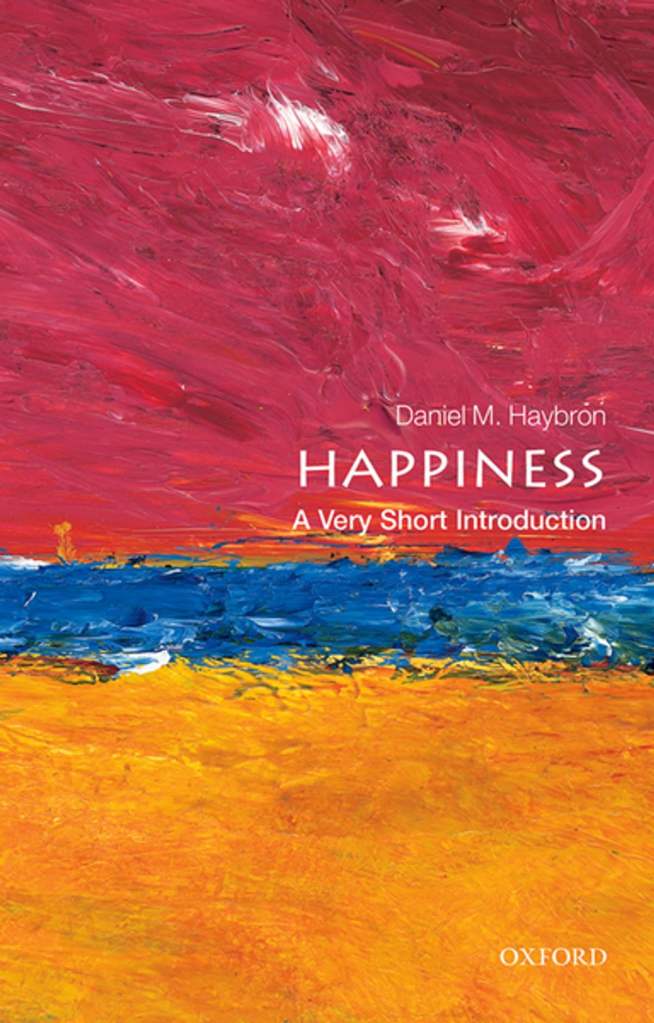
Follow through and tell me how it goes for you. You have my prayers and best wishes.
Surra,
January, 2024.

